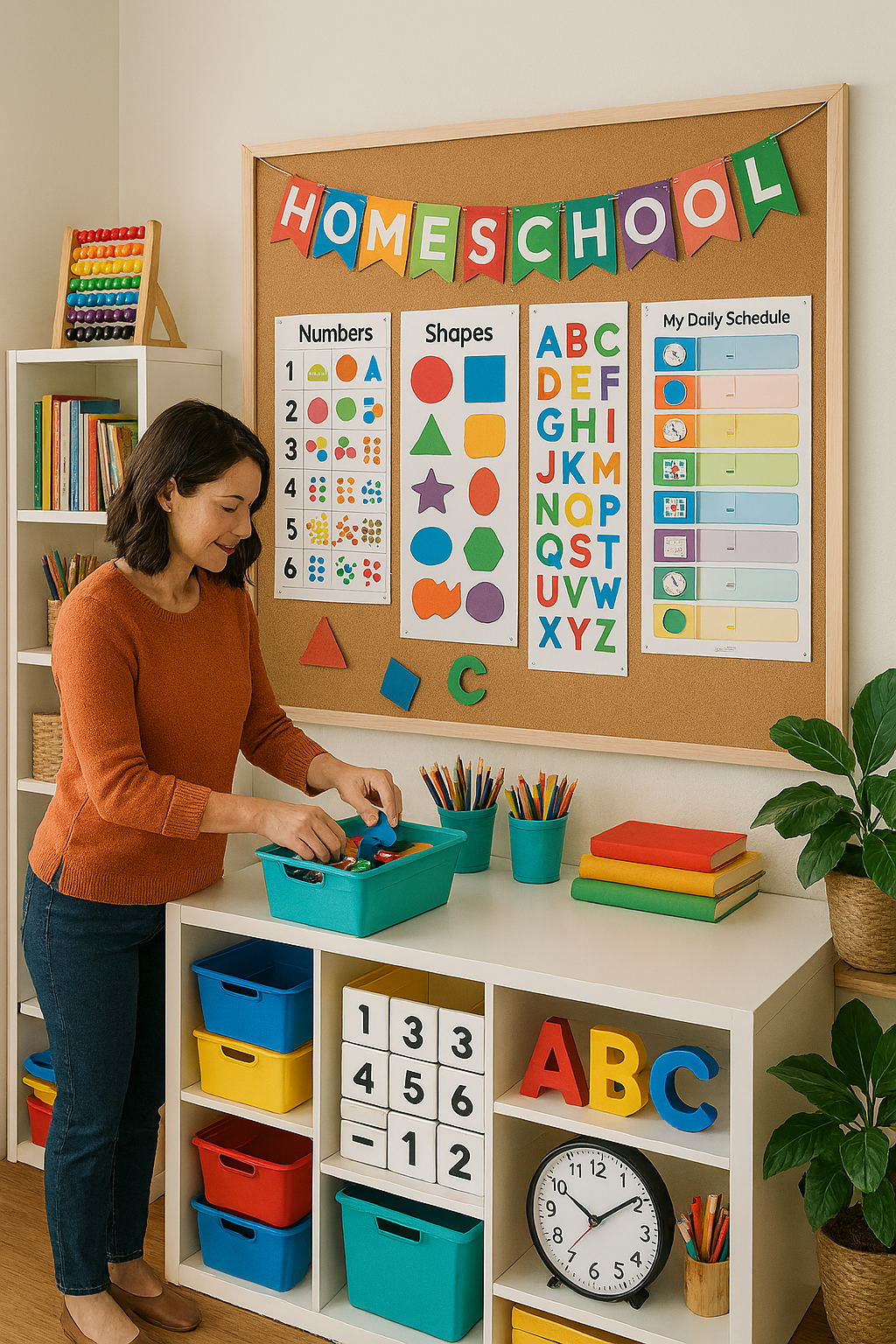
Using Everyday Items To Organize, Learn, & Play
Being a homeschooler means that your home needs to serve multiple purposes. With all of those needs, it’s easy for things to pile up. Having great organizational skills is a plus, but not everyone has the experience, desire, or budget to keep things in tip-top shape.
One way we can cut down on the clutter, though, is by limiting the amount of supplies we purchase. I’ll be honest, I’m always tempted to try out new school supplies and curricula. I have to purposely walk past the Target “gotcha” shelves when I enter the store, and don’t even get me started on the discount stores.
Today, I’m going to give you some ideas for everyday items in your home that will double their purpose to serve you. That way, we can cut down on the clutter and save a little dough.
Learning, Craft, & Snack Hacks
Shower Curtains
I love using shower curtains for various activities. They’re cheap, durable, and most homes already have them. Below are just some of the ways you can use this simple tool to meet your homeschooling needs:
- Use:
- Hang your shower curtain on the wall or spread it on the floor. You can draw grids, maps, timelines, or even sensory zones with dry-erase markers.
- Curtains can also be used as finger paint canvases or craft tablecloths for easy cleanup.
- Take it on a picnic and use it as a ground cover, or even a makeshift changing surface for your little ones. Then fold it back up for future use.
- Why it works: It’s washable, reusable, and perfect for kinesthetic learners. You can purchase, white, clear, or even a fun themed curtain to suit your style and needs.
- Example: Create a life-sized multiplication chart or a sensory scavenger hunt map for preschoolers.
Muffin Tins
At some point, there always seems to be a reason to purchase a set of muffin tins. The problem is, unless you’re a baker, you rarely use them aside from birthday cupcakes or occasional muffin recipes. Let’s pull them out of our cabinets and use them for something else instead!
- Use:
- Create a sorting station by labeling each cup with numbers, letters, colors, or categories. Have your young children sort various objects to pick up and place in their properly labeled cup.
- Use tin cups for organizing craft supplies like crayons, markers, cotton balls, glitter, etc. You can even use them to hold water to rinse your child’s paintbrushes in.
- Create snack stations by filling tin cups with various snacks like Goldfish, pretzels, fruit slices, etc.
- Why it works: Sorting stations are great for tactile learners and fine motor practice. Using the tins for craft activities helps cut down on cleanup time and helps to keep things organized.
- Example: Sort pom-poms by color, match letter tiles to sounds, or use for snack-based math (“3 grapes in each cup”).
**No muffin tins? Use Egg Cartons instead!
Cookie Sheet Magnetic Boards
Let’s get cooking! Just kidding…these pans will be used for fun and learning with these cool hacks.
- Use:
- Turn your old cookie sheets into portable magnetic learning stations. Use letter and number magnets to practice math and reading skills on the go!
- Create your own storyboard by using animal or character magnets (bought or homemade) to create whimsical stories with your littles.
- Why it works: You can pick the size board you want! Bring your manipulatives and travel-friendly activities with you for play dates, park days, or even in the car.
- Example: Create a “build-a-word” station or a magnetic timeline with historical figures.
Environment & Sensory Hacks
Pool Noodles as Quiet Dividers
I know you’ve seen a ton of uses for pool noodles on your Instagram. But have you considered using them for your homeschool space? Let’s see how you can use this fun and colorful toy for your children:
- Use:
- Cut and stack to create soft barriers between workspaces or sensory zones. Give each child their own “zone” for personal space.
- Cut small sections of your pool noodle and create sensory fidgets for your children to squeeze and hold.
- Watch out! Small pieces can break off or be bitten off by mouthing babies and toddlers.
- Why it works: Having personal space available and sensory tools help to reduce distractions and add a playful touch.
- Example: Use to separate a quiet reading nook from a busy craft table.
Essential Oil Cotton Balls in Pencil Cups
Parents and caregivers will enjoy this one just as much as your children will. The best part is, you can have your kids join you in creating “calming cups.”
- Use:
- Add calming scents like lavender or peppermint to workstations. Play around with scents in different areas of your home to boost attention, or calm your senses.
- Why it works: Invigorating scents support focus, while calming scents support emotional regulation.
- Example: Place a scented cotton ball in a jar labeled “Calm Corner” for sensory breaks.
Organization Hacks
Binder Clips as Cable & Paper Organizers
In my home, these clips are used for chip bags, construction paper holders, cable ties…you name it!
- Use:
- Clip lesson plans, chore charts, and schedules to the wall for easy view and access.
- Tame charging cords to prevent clutter and tripping hazards. Be sure not to clip directly onto the wires, but nestle them within the clip instead.
- Label subject stacks in your homeschool curriculum bundles. Use them to divide lessons by themes or even time spent.
- Why it works: Clips are inexpensive and easy to find. They’re versatile for vertical or horizontal organization.
- Example: Clip today’s schedule to the fridge or hang flashcards from a string for interactive review.
Tension Rods for Hanging Storage
I’m not talking about a fancy tension rod here. In fact, the cheaper the better. You can find them online or at your local discount or hardware store.
*If you want to use these rods for heavy objects, I suggest skipping the tension rod style and opting for a fixed rod instead.
- Use:
- Install your tension rod inside cabinets or under desks to hang light baskets, clipboards, or fabric pockets.
- Why it works: Tension rods allow you to maximize vertical space and keep materials accessible. Plus, they’re portable!
- Example: Hang a rotating “subject of the week” pocket organizer with themed books and tools.
Dish Drying Rack as Book & Folder Holder
Remember that dish rack that’s hiding under the cabinet? You know, the one that you used to use all the time, before dishwashers were a “thing?” Let’s put it to use!
- Use:
- Slot in workbooks, planners, and file folders into your rack for tabletop organization.
- Use as a craft drying rack for freshly painted pictures and craft projects.
- Why it works: Keeps materials upright and visible.
- Example: Assign each child a section for their daily work and completed assignments.
*This is meant for those who rarely, if ever, use their dish drying racks. If you use yours daily, then skip ahead for more hacks!
Hanging Shoe Organizer for Supplies
Picture the pocket shoe organizers…or even the jewelry pocket organizers for this hack.
- Use:
- Fill each pocket with markers, glue sticks, flashcards, or even snacks.
- Hang them on your tension rod for vertical storage of all your knick-knacks and supplies.
- Why it works: Clear pockets make it easy to see and grab what you need.
- Example: Label each row by subject or child. Include a “sensory tools” row with fidgets and textures.
Color-Coded Plastic Bins
Who doesn’t love a plastic bin? At one point, my home was loaded with them. Even now, I’ve got bins of Legos in our office area. It’s one of those tools that can be used for just about everything!
- Use:
- Assign each child or subject a color and organize homeschool workbooks and assignments in each.
- Sort and organize craft supplies
- Store toys and manipulatives
- Create reading bins based on subject matter or genre.
- Store STEM supplies like blocks and Legos
- Why it works: Visual cues help with independence and reduce clutter.
- Example: Blue bin = science tools, green bin = art supplies, red bin = math manipulatives.
Paper Towel Tubes as Cord Organizers or STEM Tools
These rolls can be used for countless craft supplies, but today, let’s focus on organization instead.
- Use:
- Wrap unused cords and slide them into the tubes to keep them from tangling up.
- Paint them and use them to organize cords behind your computer desks or T.V. consoles.
- Stack pipe cleaners, colored pencils, or markers into the tubes to keep them organized in your drawers and cabinets.
- Why it works: Encourages your children to reuse materials and reduce waste.
- Example: Color-code supplies or write on each tube to label its contents for easy grab-and-use situations.
*No paper towel rolls? Use toilet paper rolls or rubber bands instead!
The key to “hacking” your space is creativity. Once you begin seeing everyday, ordinary things as opportunities to reuse and repurpose, you’ll be amazed at how much money you can save.
RELATED: Homeschool Space Essentials