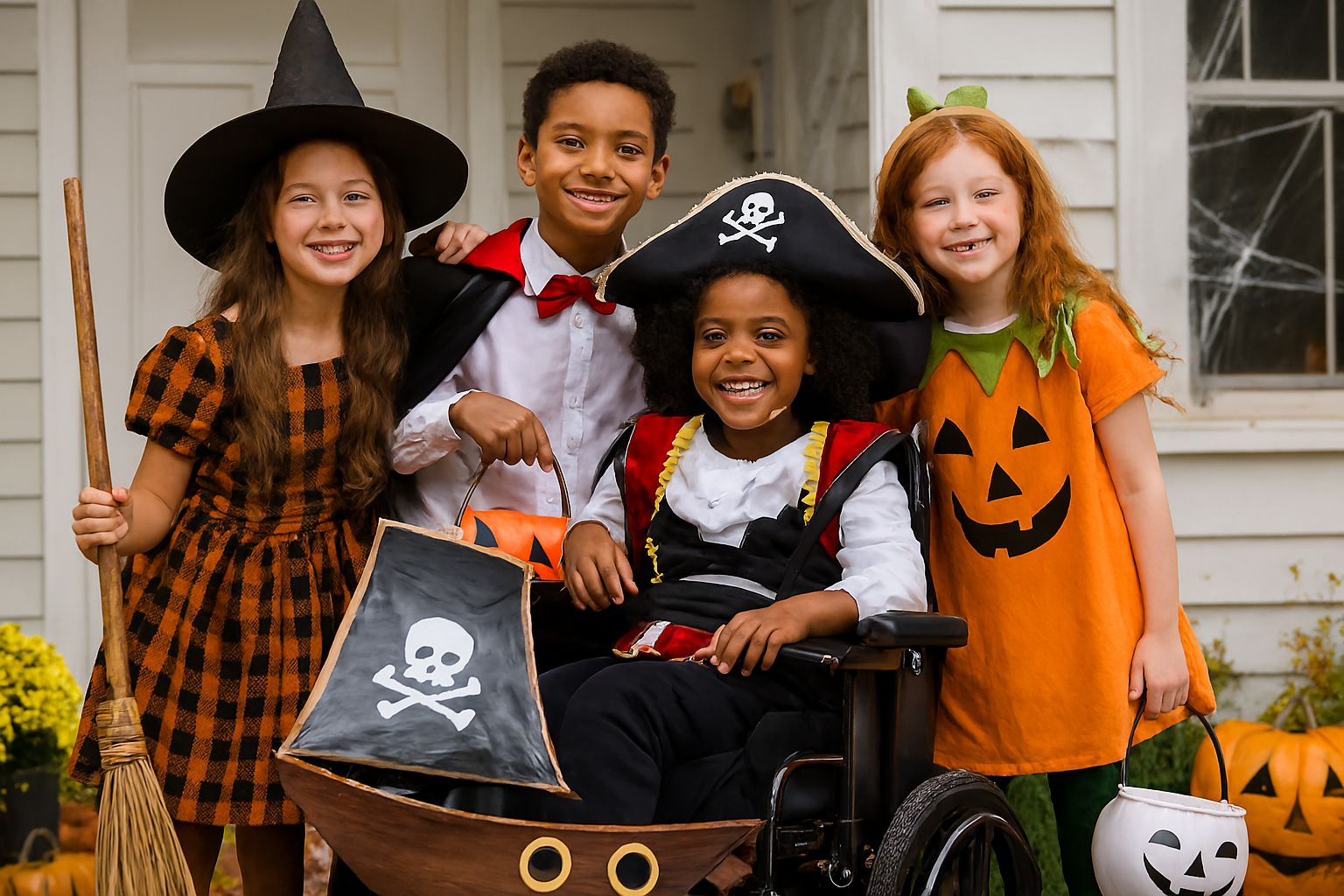
As the leaves turn and the air grows crisp, families across the country prepare for the magic of fall and Halloween. But for children with disabilities, traditional festivities can sometimes feel overwhelming, inaccessible, or isolating.
The good news? With a little creativity and intention, parents can transform seasonal celebrations into inclusive, joyful experiences where every child feels seen, safe, and celebrated.
Why Inclusion Matters
Fall traditions like pumpkin patches, costume parties, or trick-or-treating are more than just fun. They’re opportunities for connection, creativity, and memory-making.
When these experiences are adapted to meet diverse needs, they become powerful tools for building confidence, fostering friendships, and honoring each child’s unique way of engaging with the world.
Tips for Inclusive Fall & Halloween Celebrations
1. Rethink the Costume Experience
- Adaptive Costumes: Choose outfits that accommodate mobility aids, sensory sensitivities, or medical equipment. Capes, ponchos, decorated wheelchairs, and themed hoodies can be festive and functional.
- Let Kids Lead: Some children may prefer not to dress up at all. Offer choices like themed T-shirts, hats, props, or allow them to help decorate instead.
2. Make Trick-or-Treating Accessible
- Tabletop or Drive-Thru Stations: Set up decorated tables or vehicles in a driveway or community space so children using wheelchairs or walkers can easily participate.
- Visual Cues & Social Stories: Prepare kids with illustrated guides showing what to expect. Include options like “just watch,” “hand out treats,” or “visit one house.” This allows each child to choose how they’d like to participate in the festivities.
3. Create Sensory-Friendly Spaces
- Quiet Zones at Events: Some places will advertise areas where parents can bring their families for a much-needed break. Look ahead to see if this option is available before venturing out, or at the very least, there is open space for you to take a break, if needed. In addition, if you plan on being a vendor at such events, consider designating a cozy corner with beanbags, fidget toys, and soft lighting for children who need a break.
- Sensory Bins & Crafts: Fill bins with dried corn, fabric leaves, cinnamon sticks, and small pumpkins. Offer painting, sticker art, or textured decorations instead of loud or messy activities.
4. Celebrate at Home with Intention
- Inclusive Baking Projects: Make allergy-friendly treats like pumpkin muffins or apple slices with dips. Adapt tasks for fine motor needs or sensory preferences.
- Movie Nights & Storytime: Choose gentle seasonal films or books with subtitles, audio descriptions, or tactile props.
- Decorate Together: Use Velcro, magnets, or large-print labels so everyone can help place decorations.
5. Build Community Support
- Coordinate with Neighbors: Share accessibility needs ahead of time. Some communities use blue pumpkins or signage to signal inclusive trick-or-treating.
- Join or Host Inclusive Events: Look for sensory-friendly fall festivals or consider organizing one with local families, schools, or support groups.
Including The Entire Family
Inclusion starts with empathy and planning. While it is important to seek out inclusive activities, don’t forget about the wants/needs of the rest of your family. Here’s how you can ensure all your children feel valued:
- Ask Each Child What They Want: Some may love spooky sounds; others may prefer quiet crafts. Honor their preferences. Take older kids through a haunted house, and younger kids to a pumpkin patch. Do your best not to push your children to participate in a spooky activity, if they’re not ready for it.
- Prepare & Preview: If you plan to go somewhere new, use visual schedules, practice runs, or role-play to reduce anxiety and build excitement.
- Celebrate Differences: Talk openly about how everyone experiences the season differently, and that’s something to celebrate.
- Model Flexibility: If plans change or a child opts out, respond with warmth and understanding. The goal is joy, not perfection. For example, if your younger child says they feel ready for a spooky haunted house, but decides to back out last minute, offer understanding without pressuring them or making them feel guilty. They’ll join in on the fun when they’re ready!
Final Thoughts
Fall and Halloween can be magical for every child when we design celebrations with inclusion at the heart. Whether it’s a quiet pumpkin painting session or a wheelchair-accessible costume parade, these moments become cherished memories when every child feels welcome.