Balancing Joy and Learning
In my Homeschooling Through The Holidays post, I focused on incorporating homeschool lessons during holiday travel. But what about those who choose to stay close to home? We’re still faced with a whirlwind of activities, so how can we maintain balance and stay on task?
Shopping, baking, decorating, family gatherings, and sometimes the unexpected curveball of illness are among the many things we tend to juggle during this joyous time of year. This time of year can feel magical but overwhelming. The good news is that with a little creativity and flexibility, the holidays can become one of the richest learning seasons of the year.
Staying on Task Amid Holiday Chaos
When schedules fill up with errands and events, it’s easy for lessons to slip. I know I’m guilty of this myself, often settling into a light load over the holiday season. The end result leaves me feeling guilty about all of the things we could of done. So, as a reminder to myself, and to you, here are strategies to keep learning consistent without sacrificing holiday fun:
- Set a “Holiday Rhythm” Instead of a Rigid Schedule. Replace your usual timetable with shorter, focused lessons in the morning, leaving afternoons free for holiday activities. In doing so, you prioritize your lessons, ensuring that at least some time is spent with structured learning.
- Prioritize Core Subjects. Focus on math and reading daily, even if just 20–30 minutes. These skills are essential and often overlooked when we’re busy, because they’re challenging and time-consuming. It is for this reason however, that you can drop the other subjects during this busy season and pick them back up after the new year. Doing so will keep skills sharp while allowing flexibility.
- Use Checklists. Create festive visual checklists (with holiday icons or stickers) so kids can see their progress and feel accomplished. Simple switches like this can keep lessons feeling fresh and fun.
- Embrace “Micro-Lessons.” If illness or errands disrupt the day, use short bursts of learning to keep you on track. Reading a chapter together, practicing multiplication facts while baking, or writing thank-you notes as handwriting practice are all great ways to stimulate your child’s mind.
- Note: If your child is ill, there is no need to push for interactive micro-lessons. Allow them to rest and recharge. Watching educational programs is a great way to accomplish this.
Weaving Holiday Traditions Into Lessons
The holidays are full of natural opportunities to connect traditions with academics. Let’s take a look at how we can incorporate all of the common core subjects:
- Math in the Kitchen: Baking cookies becomes a lesson in fractions, multiplication, and measurement. Encourage your children to read the recipes themselves and ask leading questions to spark their problem solving skills. For example, “How much flour would I need if I wanted to double this recipe?”
- History Through Traditions: Explore the origins of your family’s holiday customs. For example, research the history of Christmas trees, Hanukkah menorahs, or Kwanzaa symbols. Deep dive into past traditions and compare them to the ways your family celebrates today.
- Language Arts with Holiday Writing: Encourage kids to write letters to relatives or Santa. Create holiday poems, or draft a family newsletter to send to loved ones. This blends literacy with real-world communication, while adding a bit of holiday fun!
- Science in Seasonal Changes: Study winter weather patterns, the science of snowflakes, or even the chemistry behind holiday lights. How do blow-up decorations work? Can you make your own at home using simple items from around the house? You can even challenge your children to question how Santa and his reindeer fly. Discuss the basic principles of flight and have your children draw a simple diagram with Santa’s sleigh.
Holiday Cheer “Cheat Sheet”
Looking for more? Here are some engaging, family-friendly activities that keep learning alive while embracing the season:
| Subject | Holiday Activity | Educational Benefit |
|---|---|---|
| Math | Create a holiday budget for gifts or groceries | Teaches financial literacy and problem-solving |
| Reading | Read holiday-themed books aloud | Builds comprehension and family bonding |
| Art | Make handmade ornaments or cards | Encourages creativity and fine motor skills |
| Geography | Map where holiday traditions originate | Expands cultural awareness |
| Music | Learn carols or holiday songs | Enhances memory, rhythm, and cultural literacy |
| Social Studies | Volunteer at a local charity | Teaches empathy, civic responsibility, and community engagement |
Making It Fun for the Whole Family
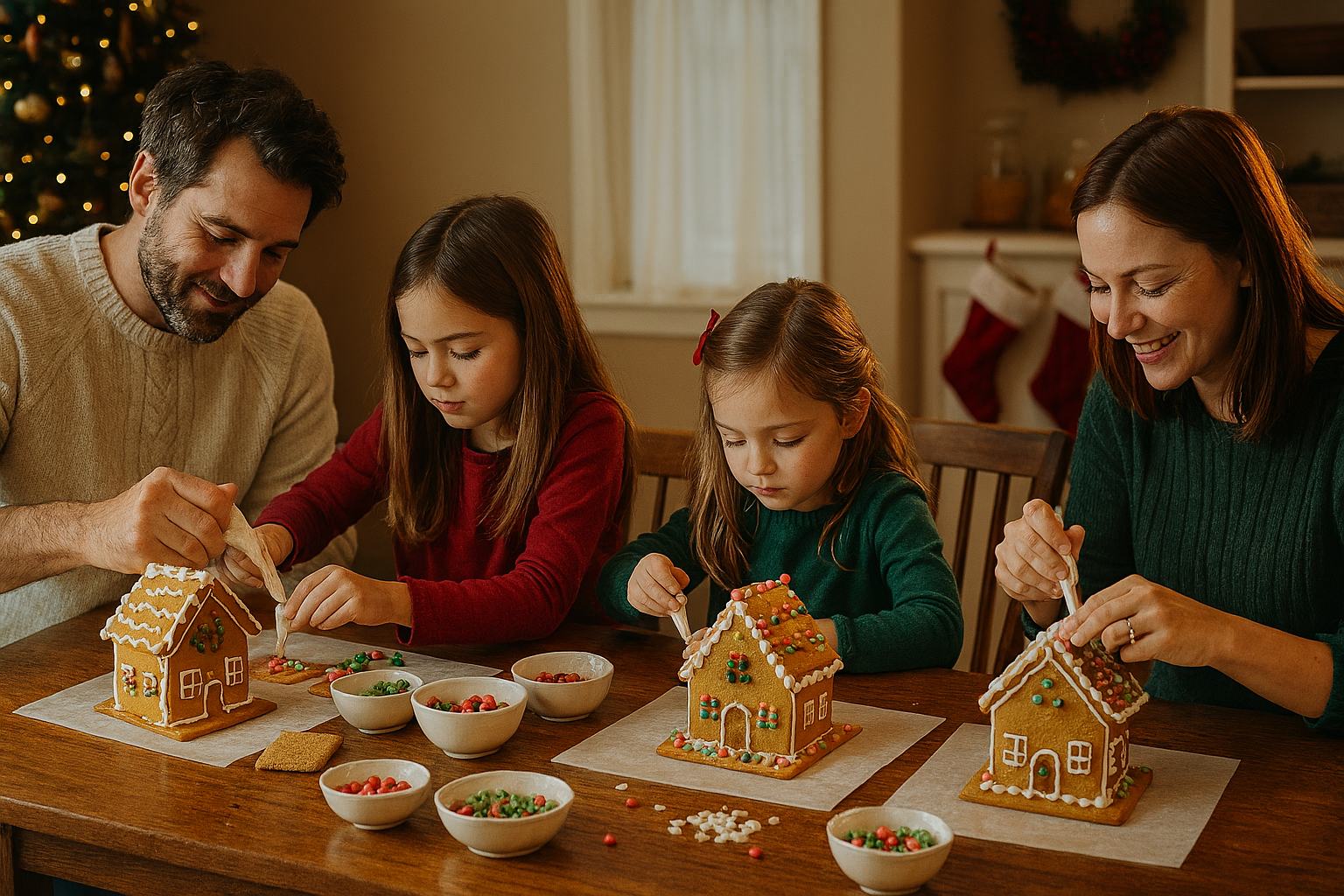
Families can bring holiday cheer into their homeschool by turning traditions into engaging learning opportunities. For example, building a gingerbread house together can become a hands-on science project when children write a “lab report” on its construction, while keeping holiday journals allows them to document daily experiences through drawings, reflections, or photos.
Game nights can take on an educational twist with math bingo using festive cards or trivia games about winter traditions, blending fun with skill-building.
Storytelling evenings also offer a chance to share cherished family memories, encouraging kids to retell them in their own words or transform them into illustrated books, making literacy and creativity part of the celebration.
Homeschooling through the holidays doesn’t mean choosing between academics and celebration. It’s about blending the two. By embracing flexibility, prioritizing essentials, and weaving traditions into lessons, families can keep learning joyful, meaningful, and memorable.
RELATED: Homeschool Switch-Ups