A Guide For Resourceful Homeschoolers
Homeschooling doesn’t have to come with a price tag. While many families invest in boxed curricula or online programs, others choose a more flexible, cost-effective path. These families operate by educating their children without purchasing any formal curriculum at all.
This approach can be empowering, creative, and deeply personalized. But is it the same as using free curriculum resources or “unschooling”? Not necessarily.
Let’s explore how homeschoolers can teach effectively without buying or printing off free curriculum, and clarify how this differs from unschooling.
Learning Without a Curriculum: Practical Strategies
Homeschooling without a curriculum doesn’t mean learning without structure, though many family purchase curriculum for exactly that reason. Instead, it means building your own. Here are several ways families do it:
1. Use Free Online Resources
This does not necessarily mean that you will use any of these free resources exclusively. Not all of them are considered complete programs anyway, but they can be used to supplement your schooling.
- Khan Academy, CK-12, Coursera, and YouTube offer free lessons in math, science, history, and more. You can use these as a jumping point to start the conversation before diving into real life activities.
- Public libraries also provide access to databases like Britannica School, Gale, and National Geographic Kids. Ask your librarian about their public computers to see what type of educational programs they have access to or what programs they have installed.
2. Leverage Public Libraries
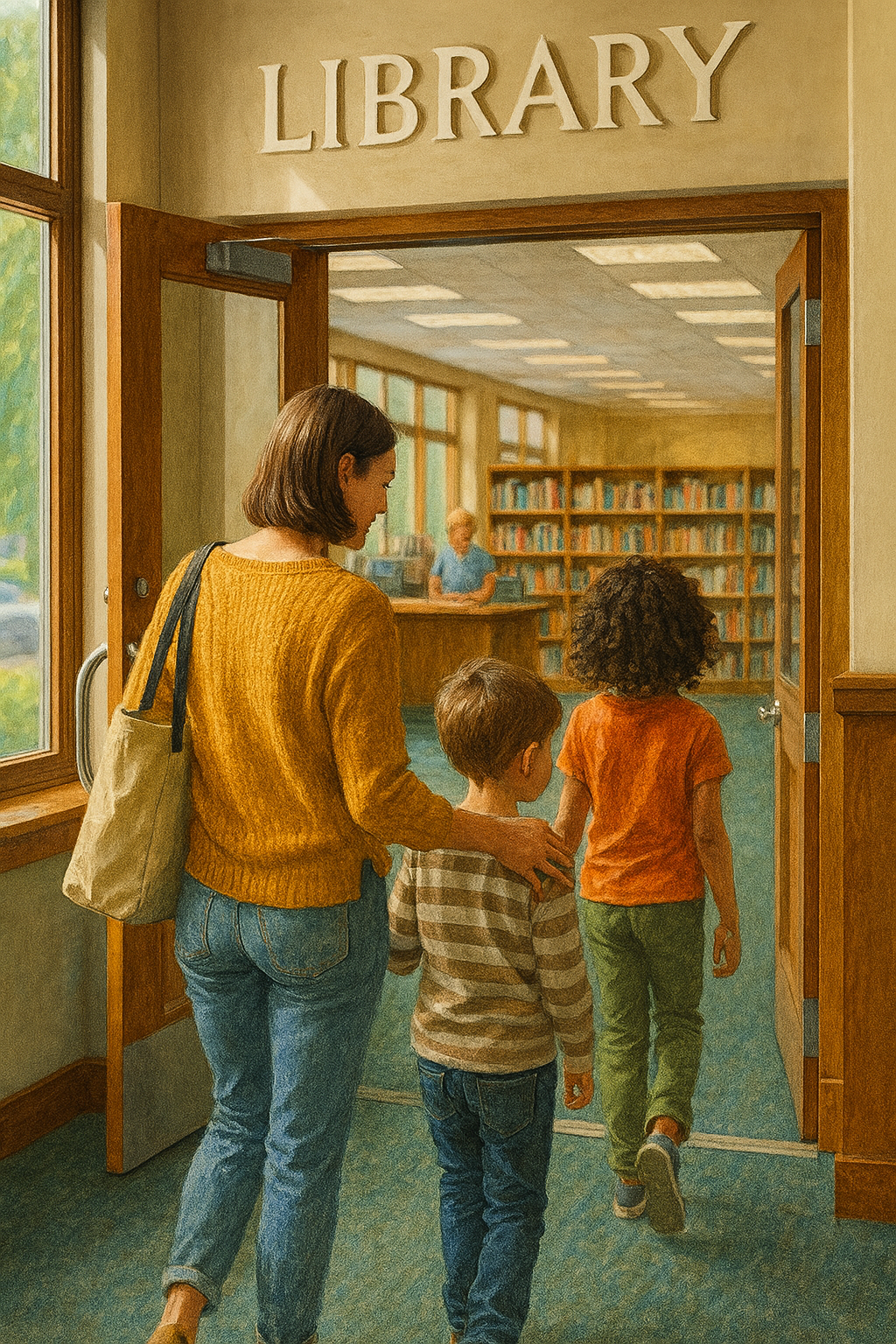
Libraries carry a vast amount of resources and opportunities for curriculum-free learning. Books are not the only tool to be used in these amazing buildings. Some facilities offer equipment that you can borrow, including tablets, cameras, and even binoculars. The list is endless, and every library differs in what it offers.
- Look for traditional textbooks, literature, documentaries, and educational kits.
- Many offer free workshops, story times, and STEM clubs on certain days of the week.
3. Create Unit Studies
- Choose a theme (e.g., Ancient Egypt, ecosystems, space exploration) and build lessons around it using books, documentaries, field trips, and hands-on projects.
- This interdisciplinary method covers multiple subjects at once, making sure to fully immerse your children in the chosen theme. History, science, reading, and even art are all incorporated into your chosen theme and lessons can last as long as you want.
4. Follow State Standards
- Most states publish grade-level learning standards online. These can guide your planning and ensure your child meets educational benchmarks. Simply read and check off areas that you’re child has studied as you go along.
5. Tap Into Community Resources
- Museums, nature centers, historical sites, and local businesses often offer free or low-cost educational programs.
- Homeschool co-ops and Facebook groups can be great sources of shared lesson plans and ideas and many of them are free.
6. Project-Based Learning
- Let your child dive into a long-term project of their choice. Maybe they want to explore building a birdhouse, writing a novel, or starting a garden. You can tailor their education by weaving academic skills into the process.
- This method fosters independence, critical thinking, and real-world application.
7. Daily Life as Curriculum
- Cooking teaches math and chemistry. Budgeting introduces financial literacy. Fixing a bike involves physics and engineering.
- Everyday tasks become teachable moments when approached with intention. As long as you take the time to explain the process and inner workings, your child is learning.
Is This the Same as Unschooling?
Not quite. While both approaches reject formal curricula, they differ in philosophy and structure.
| Aspect | Curriculum-Free Homeschooling | Unschooling |
|---|---|---|
| Structure | Often guided by parent-created plans | Child-led, spontaneous |
| Philosophy | May follow educational standards | Rejects traditional schooling norms |
| Parental Role | Active planner and facilitator | Observer and supporter |
| Assessment | May use tests or portfolios | Rarely uses formal assessments |
Unschooling is a specific educational philosophy that trusts children to direct their own learning based on interests and curiosity. Curriculum-free homeschooling, on the other hand, may still involve structured lessons, goals, and assessments.
Sample Weekly Homeschool Schedule (Ages 8–12)
Below you’ll see a sample of how you can incorporate education into your week, without purchasing a costly curriculum. Feel free to use this as a guide and alter it it to fit your needs.
Guiding Principles:
- Use free online platforms (e.g., Khan Academy, YouTube, library databases)
- Incorporate real-life learning (cooking, nature walks, budgeting)
- Follow a loose structure with room for creativity and exploration
Monday – “Math & Movement”
| Time | Activity |
|---|---|
| 9:00–9:30 | Morning journal (free writing or drawing) |
| 9:30–10:15 | Math practice (Khan Academy or homemade worksheets) |
| 10:15–10:45 | Outdoor walk + nature observation |
| 11:00–12:00 | Science: Explore ecosystems (library books + YouTube) |
| 1:00–2:00 | Art: Sketch a plant or animal seen earlier |
| 2:00–3:00 | Read-aloud or independent reading |
Tuesday – “History & Hands-On”
| Time | Activity |
|---|---|
| 9:00–9:30 | Morning journal: “If I lived 100 years ago…” |
| 9:30–10:30 | History: Watch documentary + timeline activity |
| 10:30–11:30 | Cooking project: Make a historical recipe |
| 1:00–2:00 | Math games (board games, card math, logic puzzles) |
| 2:00–3:00 | Library visit or virtual museum tour |
Wednesday – “Writing & Wonder”
| Time | Activity |
|---|---|
| 9:00–9:30 | Morning journal: Creative story prompt |
| 9:30–10:30 | Writing workshop: Story building or letter writing |
| 10:30–11:30 | Science experiment (e.g., vinegar + baking soda) |
| 1:00–2:00 | Math: Budget a pretend shopping trip |
| 2:00–3:00 | Read-aloud or audiobook + discussion |
Thursday – “Project Day”
| Time | Activity |
|---|---|
| 9:00–9:30 | Morning journal: Reflect on week’s learning |
| 9:30–11:00 | Long-term project (e.g., build a birdhouse, create a comic book) |
| 11:00–12:00 | Research skills: Use library or internet to support project |
| 1:00–2:00 | Math: Apply math to project (measurements, budgeting) |
| 2:00–3:00 | Presentation prep or sharing with family |
Friday – “Free Choice & Field Learning”
| Time | Activity |
|---|---|
| 9:00–9:30 | Morning journal: Weekly highlights |
| 9:30–11:30 | Field trip (park, museum, local business) or virtual tour |
| 1:00–2:00 | Free choice: Art, music, coding, or crafting |
| 2:00–3:00 | Weekly review + plan for next week |
Weekend (Optional)
- Family game night (math, strategy)
- Nature journaling
- Baking = chemistry + math
- Watch a documentary or educational film together and discuss what you’ve learned/what you like, or what you disliked about it.
Final Thoughts
Homeschooling without a curriculum is not only possible, it can be deeply enriching. It invites families to be resourceful, intentional, and creative. Whether you lean toward structured planning or embrace the freedom of unschooling, the key is to stay attuned to your child’s needs, interests, and growth.