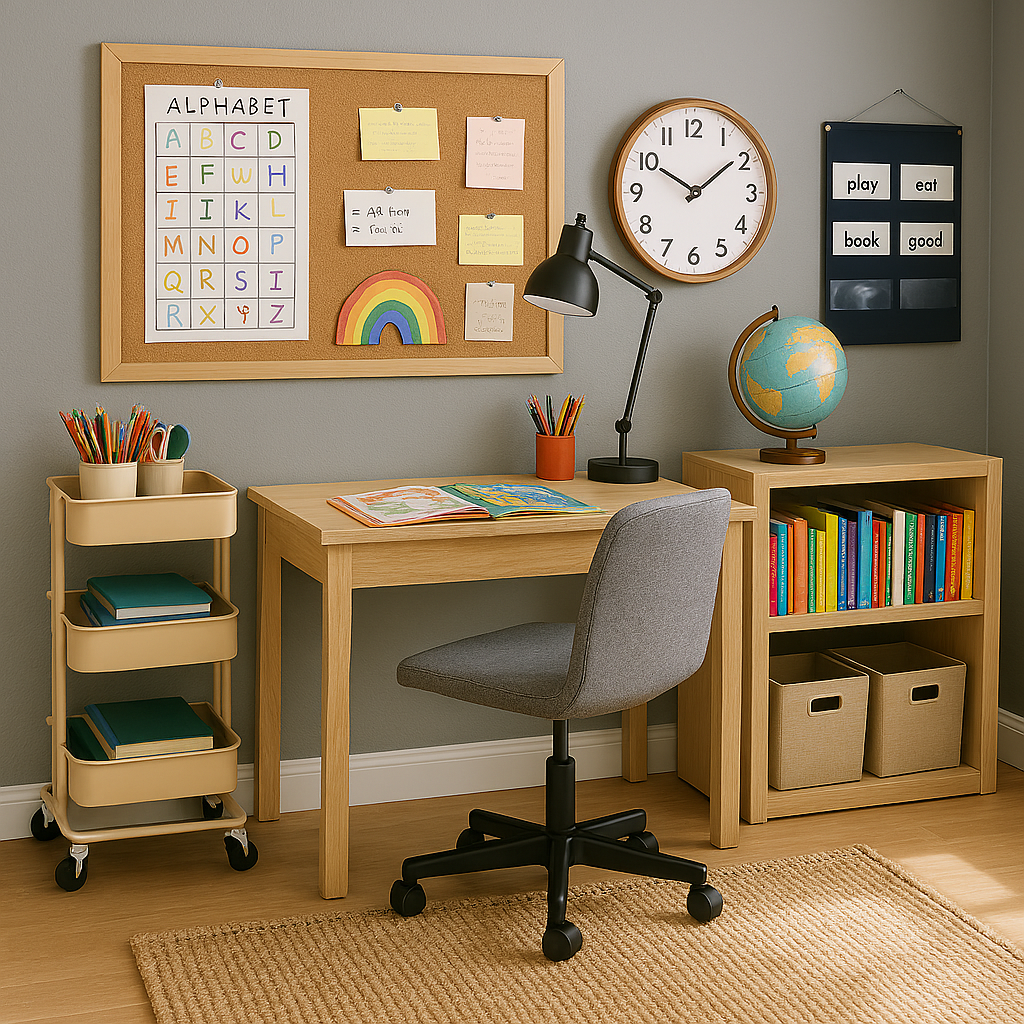
As the new school year approaches, take another look at your dedicated learning area. Is it meeting your needs? Homeschooling is all about flexibility, and the same is true for your space.
Over the last few years, we have moved across the country and back again. We’ve experienced large and small spaces for our homeschool needs. No matter how much or how little room you have, there are some things that every homeschool space should include.
Before we bein, I’d like to remind you of one thing: you don’t need a Pinterest-perfect classroom to create a space that’s functional, inspiring, and tailored to your family’s needs.
Now, with that out of the way, let’s get started!
Here’s What You’ll Need:
Core Learning Essentials
Let’s start with the basics. When you create a homeschool space, there are items that your kids will reach for every single day:
- Reliable Writing Tools: A good pencil can go a long way. As your child grows older, they may prefer using pens, but for our younger crowd, erasers are a child’s best friend. I buy a larger box of pre-sharpened pencils to start with. This allows for easy use in a pinch. I add colorful eraser tops to our stock that my kids can use once their pencil erasers wear down. Give each child a durable sharpener to avoid mid-lesson meltdowns, and you’re all set!
- Curriculum That Fits Your Family: There’s no one-size-fits-all here. Choose materials that match your child’s learning style and your teaching rhythm. If you’re struggling to find the right fit, take a look at my curriculum page for guidance.
- Basic Art Supplies: Crayons, markers, colored pencils, glue sticks, and scissors aren’t just for art! We use all of these supplies and more for science diagrams, history timelines, and creative writing lessons. Use a multi-drawer organizer for easy access.
Organization & Storage
Did I mention I love organizing? A well-organized space can help reduce stress and streamline productivity, especially if you’re working within a small area.
- Rolling Cart or Caddy: These are lifesavers in tight quarters. You can roll out your supplies when it’s time to learn and tuck them away when the day’s done.
- File Box or Binder System: Keep track of completed work, printables, and lesson plans by subject or child. It’s a simple way to stay organized and celebrate progress.
- Wall Organizer or Pocket Chart: Hang one near your learning area to display schedules, flashcards, or rotating vocabulary words. It’s visual, accessible, and easy to update.
Comfort & Ergonomics
Kids learn best when they’re physically comfortable and supported:
- Supportive Seating: Use a desk chair, a wobble stool, or a floor cushion to ensure your child can sit comfortably and remain focused.
- Adjustable Lighting: Natural light is wonderful, lamps can help on cloudy days or during evening lessons. Keep in mind that different hues can have massive impacts on overall eye strain. Personally, I cannot function in a room with fluorescent lighting. If your family members struggle like I do, opt for comfortable lighting to keep everyone happy!
Planning & Routine Tools
Lucky for me, my kids thrive on a schedule. A little structure goes a long way in keeping your homeschool day smooth:
- Visual Schedule or Daily Checklist: These help kids know what to expect and build independence. You can use magnets, dry-erase boards, or printable charts. As your children develop, swap schedules for responsibility or chore charts.
- Whiteboard or Chalkboard: These do not need to be huge! I use a small whiteboard every day and store it away in a cabinet when it’s not in use. You can use these for spelling words, working through math problems, or drawing for visual learners.
- Timer or Clock: I cannot stress how useful this tool was for my children during their younger years. Set it to signal transitions, breaks, or focused work time. You’ll be glad the timer is in charge when your child is working on their least favorite subject.
Learning Enhancers
While not completely necessary, these extras make your space feel like a true learning hub:
- Bookshelves or Book Bins: Keep books visible and inviting for little hands to grab. Add to the fun by rotating selections to match your current unit or your child’s interests.
- Reference Materials: A dictionary, globe, maps, or science posters can spark curiosity and support independent learning. While you may not use these items every day, they can add a layer of fun to your child’s learning. When these items are in plain view, your children are more likely to ask questions about them.
- Tech Tools (if used): Tablets, laptops, or educational apps can be powerful tools when used with supervision. We like to use our computer for typing lessons, and our tablet for foreign language lessons.
Personal Touches
Finally, don’t forget to make the space feel like yours:
- Inspirational Decor: Hang up favorite quotes, student artwork, or seasonal themes. Including personal touches will add warmth and pride to your space.
- Quiet Corner or Reading Nook: Even a pillow and blanket in a corner can create a cozy retreat for reading, journaling, or quiet reflection. For this, we’ve used bean bag chairs and even dedicated couch corners.
No matter your square footage, your homeschool space can be a place of growth, creativity, and connection. Start with the essentials, add a few personal touches, and let your space evolve with your family’s journey.