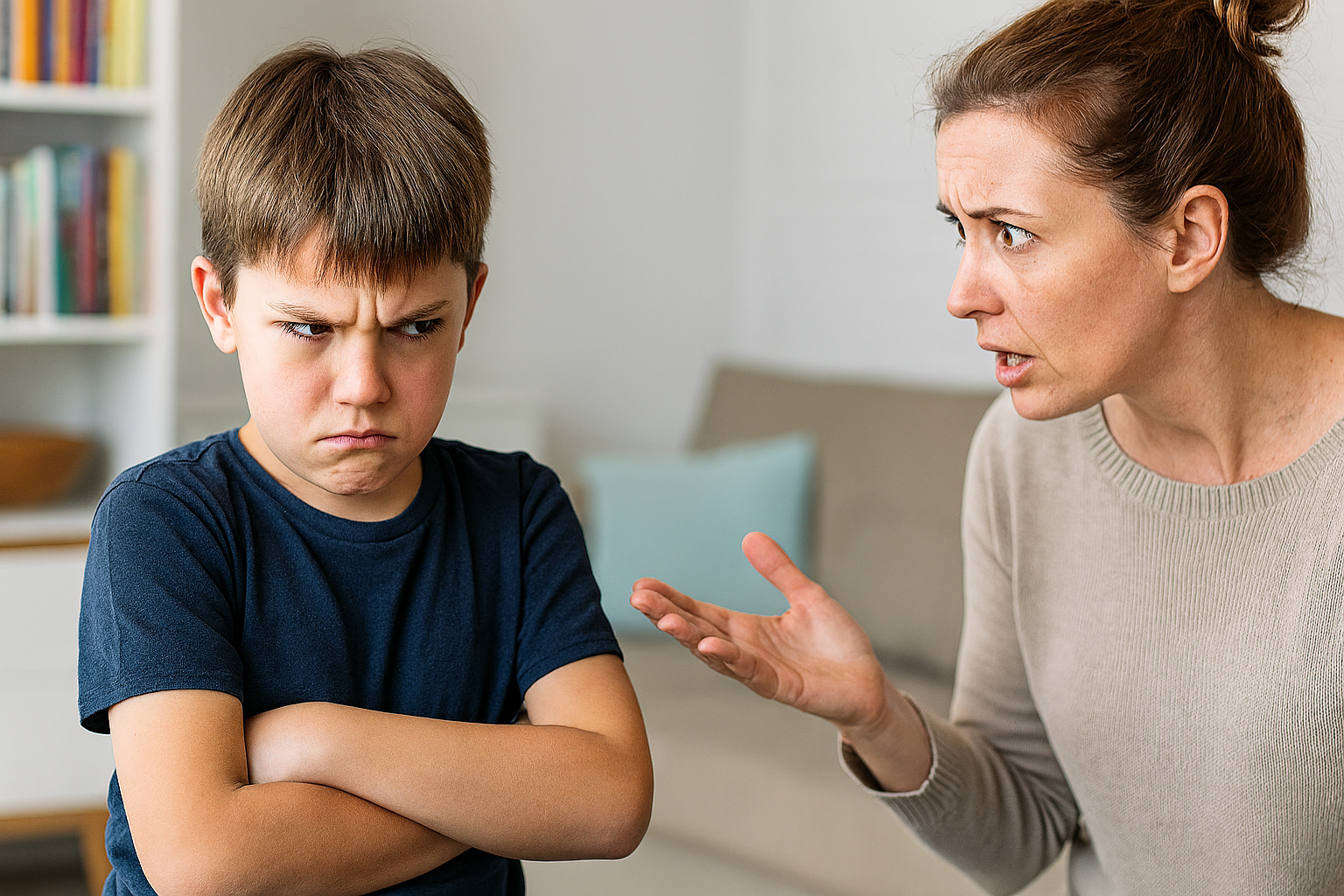
Resolving Parent-Child Conflicts & More
We’ve all heard it, “I could never homeschool…we’d end up arguing the whole time.” The amount of people who have said that exact sentence to me is astonishing. It signals a deep disconnect between the parent and child relationship. While it’s typically aimed at the child’s behavioral patterns, more often than not, that disconnect is the result of insufficient support for both the child and the parent.
Knowing Your Limits
There is a significant difference between choosing not to homeschool due to the child’s behavior versus the parent’s tolerance. Knowing your emotional limits is something that, quite frankly, should be celebrated. I commend those parents that handle the world’s stressors and know that their own behavior would not be conducive for a supportive homeschooling environment.
Recognizing your own limits shows great emotional intelligence on your part. Ultimately, it’s up to you whether or not you wish to work on regulating your stress and patience levels.
I want to remind you, though, in case you fall into this category: we all have our limits. You are capable, should you choose to work on these skills, and doing so will help your child learn to regulate themselves.
Facing Behavioral or Mental Health Challenges
Not all families are equal in their challenges. Each have their own outside stressors to deal with, but when you’re faced with additional behavioral or mental health issues, you may be feeling defeated before you even attempt to homeschool your child.
Let’s take a look at some common challenges that parents and families face.
Role Strain and Emotional Overload
Parents must juggle being both caregiver and educator, which can blur boundaries and intensify conflicts. It takes practice, but knowing when to switch between these roles can significantly impact expectations within the home. Starting early is best, but consistency is key, no matter what age you begin to homeschool.
Emotional fatigue is common, especially when managing meltdowns, defiance, or anxiety without external support. Some days are tough. Lack of sleep, stress outside of the “classroom,” illness, etc, all impact a person’s mood.
Your child is no different. Recognizing when to push through versus when to pull back will have lasting impacts on your homeschooling relationship.
Lack of Specialized Training
Most parents aren’t trained in early childhood education, behavioral therapy, trauma-informed teaching, or special education techniques. This fact is something that I really wish weren’t true, but there simply isn’t any form of parental guidance that we’re taught before having children.
Sure, you can take birthing classes, and if you adopt or foster, you’re required to take some hourly courses, but parenting styles are mostly learned through generational and familial influence.
Think about that.
Any other job, no matter how much skill is required, will have some sort of training period associated with it. Years of schooling are required for some professions…but nothing is required or even encouraged to do the most important job of all: parenting.
This lack of training can lead to ineffective responses to outbursts, shutdowns, or neurodivergent needs…and what do children do? They learn from your responses. They see firsthand, by example, how to react to similar situations, thereby creating a cycle of poor emotional communication between the parent and child.
Limited Access to Professional Services
It takes a village right? What if your village is small or non-existent? Families may struggle to access the extra support that they need, causing additional strain on the caregiver.
Even if you’re highly educated in the world of parenting, mental health, and behavioral disorders exist. They often require a team of people, working together, for the benefit of the child.
Here are some valuable team members that can be hard to come by:
- Therapists or counselors familiar with homeschool dynamics
- Behavioral interventionists or occupational therapists
- Diagnostic services for learning or mental health disorders
Even if you have access to these resources, not all are within financial reach, and some professionals may not be a good fit for your family’s needs.
Social Isolation and Peer Conflict
Children with behavioral or emotional challenges may find group settings overwhelming, yet isolation can worsen symptoms. This delicate balance can be hard to reach, especially in a household with multiple children.
Sibling dynamics may suffer if one child’s needs dominate the homeschool environment. If you find yourself constantly catering to one child’s needs, the other child will often feel neglected or even unimportant. This can lead to further isolation for your “secondary” child, as they are unlikely to voice their needs and instead, place the needs of others before themselves.
It is your responsibility to meet the needs of every child in your homeschool environment. One-on-one time can be arranged during certain periods of the day, but there must also be time for group activities and socializing opportunities for all.
A family operates best as a team, and the most successful teams allow space for every member to work together towards their common goals.
Inconsistent Routines and Executive Function Struggles
Consistency is key, but flexibility is essential. Mental health conditions like ADHD, OCD, or depression can disrupt routines, motivation, and task completion, causing interruptions in your consistent schedule.
You may find it hard to enforce structure without triggering resistance or emotional distress. This is where flexibility and understanding go a long way. For example, if your child is struggling to sit at a table to do their spelling, try a game of hang-man instead.
In this way, you’re child is still experiencing a scheduled learning time, even if it’s not in the way in which you originally planned. Your child will recognize that school will go on, and their behavior will not necessarily dictate when you decide to take a day off.
Financial and Time Constraints
Therapy, adaptive materials, and respite care can be costly. Resources are out there, but you may lack time to research, plan, and implement individualized strategies while managing household responsibilities.
You must make time.
Even if you dedicate a few minutes a day to Google resources in your area, you’ll be better off than doing nothing at all. Resources can be hard to find, especially depending on where you live.
Join Facebook groups, talk to your pediatrician, call your insurance company and ask for referrals, deep dive into internet searches, and visit your local libraries for help.

Resolving Conflicts
Whether or not you are dealing with a behavioral or mental health disorder, conflicts will arise. Below are some helpful tips on how to resolve conflicts between you and your child, between siblings, and between friends.
Parent-Child Conflict Resolution
1. Use Collaborative Problem-Solving
- Invite your child to help identify the issue and brainstorm solutions. Ask them questions about what is bothering them and offer some possible answers if they are unable or unwilling to communicate.
- Let them know that you wish to help them, and if they talk openly with you, you can work together to resolve the issue.
- Example: “What do you think would help make math time less frustrating?” Offer solutions that will help improve the homeschool environment, based on their response.
- This allows your child to voice their frustrations and feel heard as a valuable member of your homeschooling team.
2. Establish Clear Roles and Boundaries
- Some households run smoother when there is a clear difference between parent and teacher roles. Try to define when you’re “teacher” vs. “parent” to reduce power struggles.
- Stick with a schooling schedule to help decipher the difference. For example, from 9 a.m. to 2 p.m., your children can expect schooling, and all other times, they can expect life to resume as it normally would, with you acting as their parent.
- You can use visual cues like hats, signs, or schedule blocks to signal role shifts for younger children, until they begin to recognize changes in time.
3. Validate Emotions Before Redirecting Behavior
- Acknowledge your child’s feelings first: “I see you’re overwhelmed.”
- This alone can significantly de-escalate a conflict. When a person feels heard or seen, they will begin to relax and reduce defensive behaviors.
- Then guide your child to a productive solution: “Let’s take a break and come back with fresh eyes.”
- Not everything needs to be hashed out in that exact moment, especially when tempers run high. Move the conversation to a different location to help reset.
- Go to a quiet room or step outside for some fresh air. This will help both parties relax before continuing the conversation.
4. Offer Choices Within Structure
- Children want to be heard. They want to feel included. Let them choose between two tasks or decide the order of subjects.
- When I notice that math is becoming a struggle in the morning, I ask my kids if they’d rather do spelling during that time.
- When my son is particularly argumentative and unwilling to participate in school (usually on a Monday), I give him two choices. He can either work on his schooling with me in that moment, or he can push it aside and continue working on it later in the day (before playing video games).
- In this way, my children are given options, but understand that schooling will continue and work will be completed prior to their end-of-the-day activities.

Sibling Conflict Resolution
1. Create Personal Zones and Shared Zones
Everyone needs their own space. I remind my kids of this constantly in my house. Children may be small, but their feelings are big! When two or more “big-feeling” children share a space, arguments can ensue.
- Use visual boundaries (tape, rugs, bins) to define personal space.
- I use a freestanding desk divider on our kitchen table to ensure that my kids can focus. It reduces arguments and competitive attitudes and allows them to work separately in the same space.
- Rotate shared areas to prevent territorial disputes.
- If you have a basement play area or a reading nook, switch up the areas once in a while to give them a fresh look. Set a timer in each space to allow each child time to use the space on their own.
2. Use Peer Mediation Techniques
- Teach siblings to express needs using “I feel” statements.
- This technique will help them far beyond their sibling disputes. It allows them to take responsibility for their feelings, and reduces the amount of blame placed on others.
- Practice active listening and taking turns during conflict resolution.
- Work as a mediator. Give each child your attention and allow them to recount the dispute, according to how it occurred to them.
- For example, last night my kids got into an argument while brushing their teeth. My son struggles with personal space and wasn’t listening when his sister told him to leave her alone. She got frustrated and stomped on his foot.
- Both children were listened to separately. This avoids tempers running high and people talking over one another.
- I explained to each why the actions of the other person were wrong and hurtful, and why their actions were also wrong and hurtful. I also gave both suggestions on what to do in the future.
- I informed both to apologize for their behavior, and we agreed to brush our teeth separately from now on, to avoid any further conflict.
- Problem solved.
3. Schedule One-on-One Time
- Give each child individual attention to reduce competition and resentment.
- This can be especially challenging if you have a child who requires more of your attention.
- In this case, you have two options:
- You can push yourself further to include your other child(ren) in one-on-one activities to ensure they feel valuable and included.
- You can lean on your support members (family and friends) to give them personalized attention or to help take over and share responsibility with the child who requires constant guidance and intervention.
- There is no option to leave them on the sidelines. They exist and therefore cannot be ignored. Use the time you have with them, no matter how small, to affirm their strengths and interests. Put your phone away, turn off the laptop and television, and give them your undivided attention throughout the day, even if its only for a few minutes.
4. Gamify Cooperation
- Use team-based challenges or point systems for collaborative behavior. We have chore charts that focus on teamwork and responsibility. Each week we work on various skills and behaviors, where my kids can earn stars, allowing them to work towards a goal or prize after a certain time period.
- Example: “Earn stars together for helping each other during cleanup.”

Child-Friend Conflict Resolution
1. Model and Practice Social Scripts
- If your child struggles with peer relationships, you can role-play common scenarios like sharing materials or disagreeing on rules. This helps to build confidence and problem-solving skills.
- Provide phrases like “Can we take turns?” or “Let’s find a compromise” into your scenarios to teach your child how to communicate effectively.
2. Set Group Norms for Playdates or Co-ops
- Create a shared agreement with rules like “No name-calling” or “Ask before borrowing” amongst your social groups.
- Post rules and guidelines online for parents to see and review before group activities. This will reinforce behavioral expectations within the group and allow for a team effort in supervision.
3. Use Reflective Breaks
- If conflict escalates, guide kids to take a “cool-down” break with sensory tools or quiet time. Allow each child to have space away from those they are quarreling with. This will also allow you to speak to the other parent and discuss conflict solutions moving forward.
- Reflect afterward: “What happened, and what could we do differently next time?” Openly discuss with both parties to ensure future disputes occur less often, or better yet, resolve between them without the need for intervention.
4. Encourage Repair and Reconnection
- Teach kids to apologize meaningfully and offer a gesture of repair (drawing, note, shared game).
- For example: “I’m sorry for…”
- Teach your child to include their behavior in the apology. This ensures they understand what they are apologizing for.
- For example: “I’m sorry for…”
- Reinforce that conflict is normal and relationships can heal, as long as both parties work towards a healthy solution.
The Bottom Line
The decision to homeschool should not be based on if you and your child find yourselves at odds on a regular basis. If they’re struggling with behavioral and emotional regulation at home…guess what? They also struggle in school. Passing on the responsibility of teaching that regulation onto school teachers is likely to result in a lifetime of struggle.
Traditional school teachers simply do not have the time or resources to parent your child. Their job is to educate them. There is a difference.
In fact, many homeschooling families have based their decision to homeschool on their child’s behavior in a traditional setting. In this case, bringing a child home and working through regulatory skills is often met with positive results.
My advice? Educate yourself on emotional intelligence, mood and behavior disorders, mental health disorders, and more. Reach out to professionals for testing and guidance if you feel your child is struggling with an undiagnosed disorder, and push for resources to help them manage it effectively.
Communicate with your child and treat them like the people that they are. Build a team within your home and establish boundaries and expectations. It takes time. Be consistent, but flexible.
Most of all, believe in yourself and your child’s abilities. Conflicts do not solve themselves and are not solved by one person. Teach your child how to communicate with you and give them a voice to help resolve conflicts when they arise.
RELATED: Staying Connected With Your Tween