
In elementary school, my art teacher taught us how to do watercolor resist paintings. It was a fairly new technique, even for her, but the whole class gave it a shot and we had so much fun doing it!
All you do is draw with a white crayon or apply masking tape to create hidden designs, and paint watercolors over your design. As your watercolor paint is brushed over the surface, the wax or tape resists the pigment, revealing bright, bold patterns beneath. It’s like watching invisible ink come to life!
Why It’s Beneficial for Late Elementary Students
- Creative Confidence: Your kids will explore abstract and representational art without fear of “mistakes.” Enter, my love for abstract art! Shout out to my old art teacher!
- Fine Motor Development: Drawing with wax and painting with control strengthens hand-eye coordination. The key is consistent pressure. The more your child presses a thick layer of crayon onto the page, the more the watercolor will highlight in the end.
- Planning & Visualization: Your child can imagine their design before it’s revealed. This helps to boost spatial reasoning and helps them organize their thoughts.
- Sensory Engagement: The contrast between smooth wax and fluid paint offers a rich tactile experience. It’s a great way to showcase mixed media art techniques.
- Emotional Expression: Your child’s color choices and design themes allow for personal storytelling and mood exploration. You can even create themed art based on the season!
Let’s Get Started:
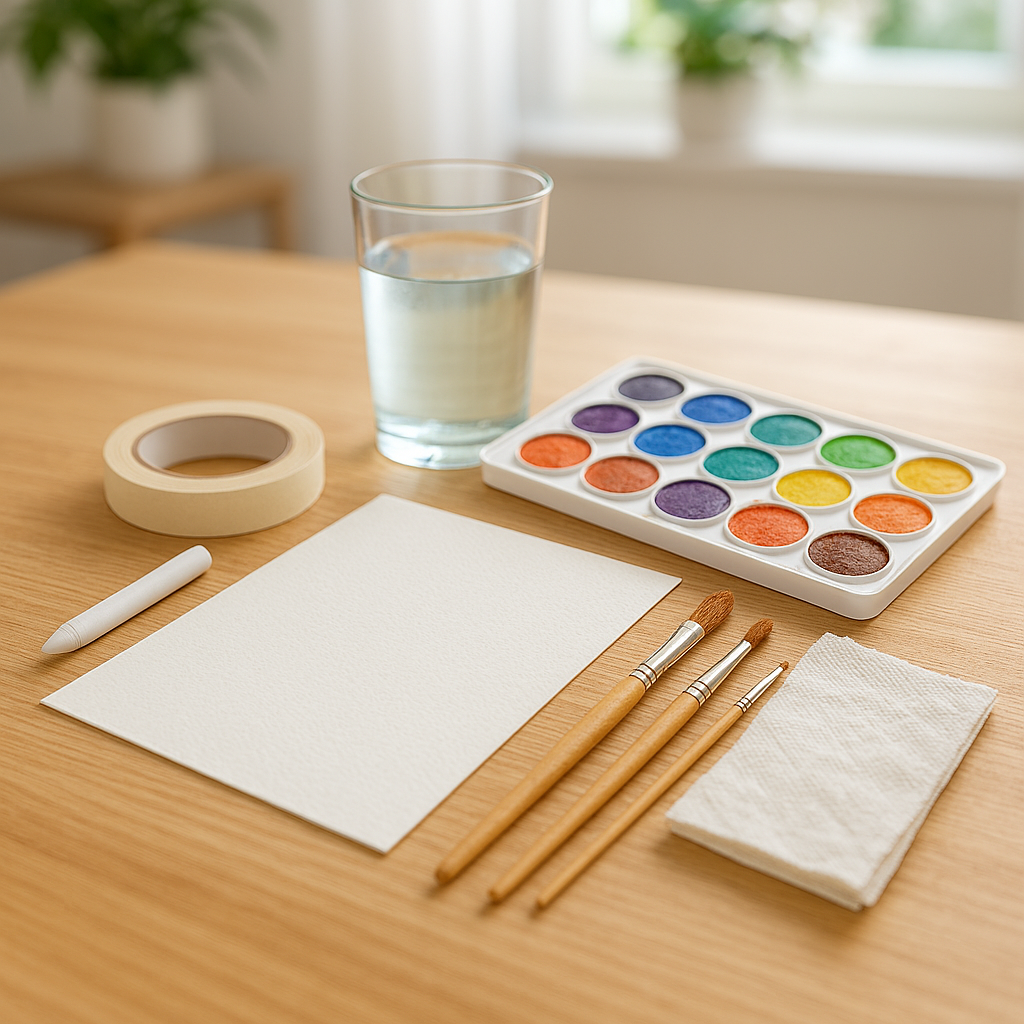
Supplies
- Watercolor paper or thick cardstock
- White crayon or masking tape
- Watercolor paints
- Paintbrushes
- Cup of water
- Paper towels or rag for blotting
- Optional: salt, cotton swabs, or sponges for texture effects
Directions
- Create Your Design Use a white crayon to draw shapes, patterns, or secret messages. Press firmly for best results. Alternatively, apply masking tape in geometric designs.
- Paint with Watercolors Dip your brush into watercolor paint and gently brush over the entire paper. Watch as your hidden design resists the paint and begins to appear.
- Experiment with Texture Sprinkle salt on wet paint for a crystallized effect, or dab with a sponge for soft blending.
- Dry & Display Let the painting dry flat. Frame it, turn it into a greeting card, or hang it as part of a classroom gallery.
RELATED: Galaxy Jars